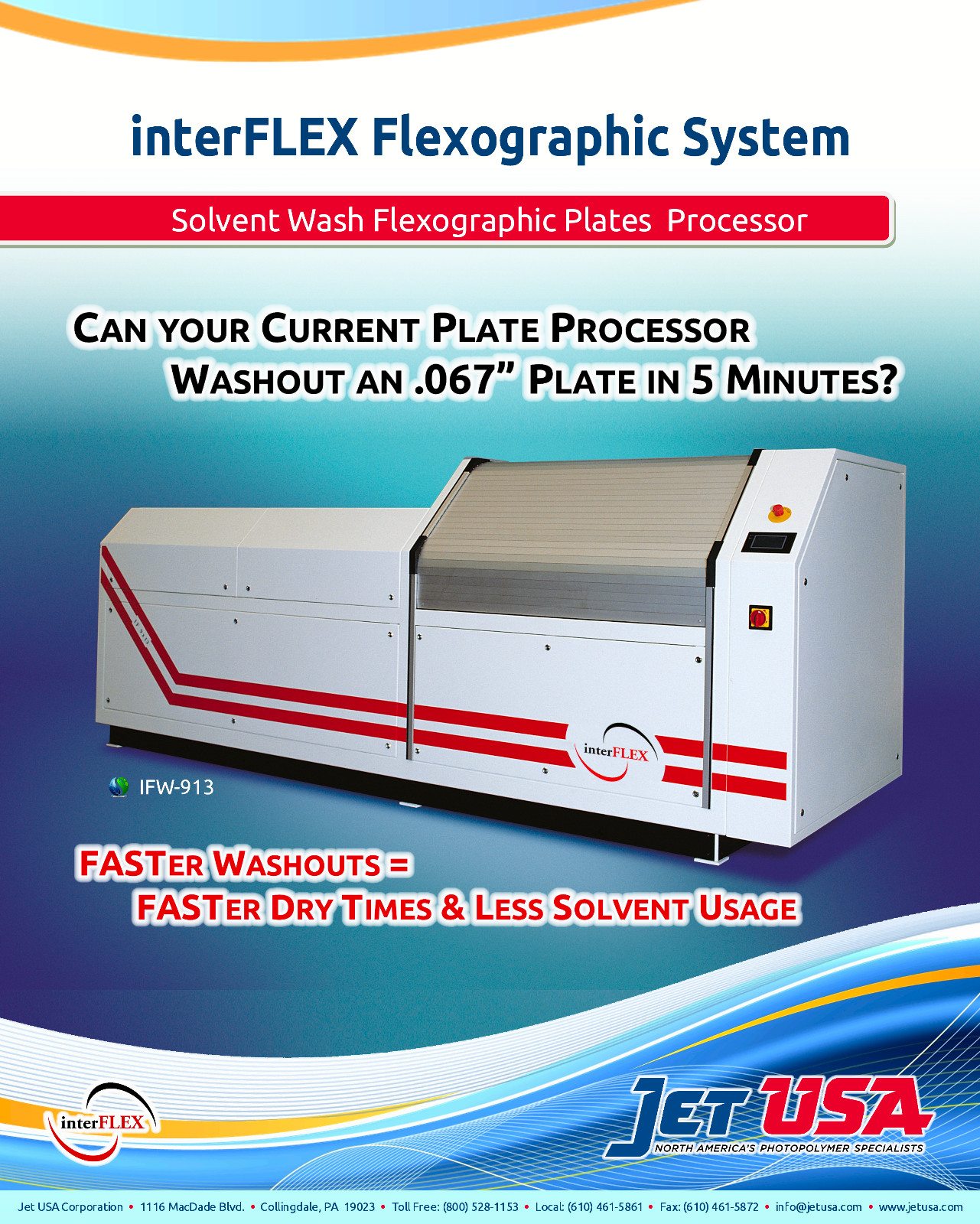
Choosing a flexographic plate processor means weighing throughput, solvent consumption, floor space, and the level of hands-on cleanup. The Interflex 913 Flexographic System, a used showroom/demo unit listed at USD 69,500.00, tackles those priorities with an in-and-out design that aims to reduce both footprint and solvent waste. Should it be on your shortlist?
Quick verdict
If you run a flexographic shop that goes through a high volume of photopolymer plates, the Interflex 913 deserves attention. The listing describes it as the number one selling solvent washout system in Europe, and the engineering story is compelling: a full bed of rotary brushes semi-submerged in solvent tanks carries solvent to the inverted plate, rather than showering fresh solvent over just a handful of brushes. That design, along with a final cleaning step, means the plate returns almost dry to the touch and requires less blue shop-towel work in the plateroom.
Who it suits
This is built for shops that want speed and solvent economy in a compact package. The in-and-out layout takes up less floor space than a conventional inline washout system, which matters if your platesetting area is tight. It also fits operations already committed to solvent-wash photopolymer workflows and computer-to-plate (CTP) technology. Because the unit is a showroom/demo model in used condition, it may appeal to buyers who want a path to a complete solvent washout system at a listed price of USD 69,500.00 without paying for a brand-new machine.
What stands out from the listed details
- In-and-out design: The plate is loaded, processed, and then removed, rather than traveling through a linear inline tunnel. This reduces the machine's footprint.
- Semi-submerged rotary brushes: The brushes sit partially in the solvent tank. The description says this minimizes wasted clean solvent that inline systems shower over few brushes, making the Interflex one of the lowest-solvent-consuming systems available.
- Almost dry output: A final cleaning stage in the cycle leaves the plate dry to the touch, so operators can handle it sooner and use fewer shop towels.
- Solid build: The listing lists metal construction, UV light source, and a model number of IF-913-SYS.
Meaningful trade-offs
The big trade-off is the upfront investment: USD 69,500.00 is a serious line item for a plateroom addition. And because this is a solvent-wash system, you'll need the appropriate solvent workflow, ventilation, and waste handling in place. If your shop is oriented toward water-wash plates, this unit won't fit without changing your media. Also, keep in mind the unit is used and a showroom/demo model, so it won't have the same condition as a new machine. The listing does include it as a complete system, but be certain that the machine's history and setup match your needs before committing.
Product focus: Interflex 913 Flexographic System - Solvent Wash Photopolymer - Showroom / Demo
At $69,500.00, this is a significant purchase, but the in-and-out design and low-solvent operation could lower your per-plate cost over time. The used showroom/demo condition is your main variable: you're buying proven flexographic technology at a used price, and the description highlights a patented washout approach you'd be hard-pressed to find in a typical inline unit.
Bottom line
For shops that already use solvent-wash photopolymer plates and have the floor space flexibility to install an in-and-out machine, the Interflex 913 looks like a sensible way to speed up platemaking while cutting solvent use and cleanup. Just go in with eyes open about the used showroom/demo condition and the solvent handling requirements.