Choosing a filling machine for small-batch pharma, cosmetic, and chemical process equipment work usually comes down to a trade-off: you want repeatable fills without committing to a fully automated line. The Hand Operated Manual Filling Machine sits in that middle ground, pairing manual operation with a ±1% filling accuracy spec and three listed fill volumes (100mL, 200mL, 300mL). At USD 390.45, it's a concrete, low-complexity option for shops that bottle liquids, gels, creams, and pastes.
Quick verdict
If you need a straightforward way to move from hand-ladling into bottles to a more consistent fill process, this manual filler is worth a close look. The machine is designed for operators to control each fill, and the listed accuracy of ±1% gives you a target to plan around. It's not a fast automated system; it's a manual tool for steady, small-batch work.
Who it suits
This filler fits small production spaces that handle a variety of containers. The description lists plastics and paper as packaging materials, with support for stand-up pouches, barrels, bottles, pouches, and cans. That flexibility matters for makers producing creams, liquid soap, juice, milk, water, oil, and paste. If you're running a cosmetics or personal-care line and need to switch between bottle sizes, the 100mL, 200mL, and 300mL volume options give you clear points to work with.
What stands out from the listed details
The key differentiator is the accuracy spec: ±1% fill accuracy is meaningful for a manually operated unit. The machine weighs 12.5 kg and measures 82 x 32 x 31 cm, which is a manageable footprint for a bench or table setup. The stated applications cover food, chemical, and beverage packaging, so it's not limited to cosmetics. The filling materials listed-milk, water, oil, liquid soap, juice, and paste-show the unit is intended for liquids and thicker pastes.
Because the drive type is manual, the operator supplies the motion for each fill cycle. That keeps the setup simple and avoids the need for a dedicated power connection for the filler itself.
Meaningful trade-offs
Manual operation is the main trade-off. Every fill depends on the operator's timing and technique, so output speed is limited by human hand speed. The three listed fill volumes are 100mL, 200mL, and 300mL, which gives you clear options but not a broad continuous range. For a shop that needs to fill a variety of container sizes, the flexibility comes from the packaging types (bottles, cans, barrels, pouches) rather than from an infinitely adjustable volume setting. This filler is best for steady batches where the operator can maintain a consistent rhythm.
Bottom line
At USD 390.45, the Hand Operated Manual Filling Machine offers a practical manual filling solution for small cosmetic, pharma, and chemical operations that want better repeatability than hand-pouring. Its ±1% accuracy spec and multi-container compatibility make it a sensible first step toward more consistent packaging-as long as you're comfortable with manual output and the listed 100-300mL volume options.
Hand Operated Manual Filling Machine
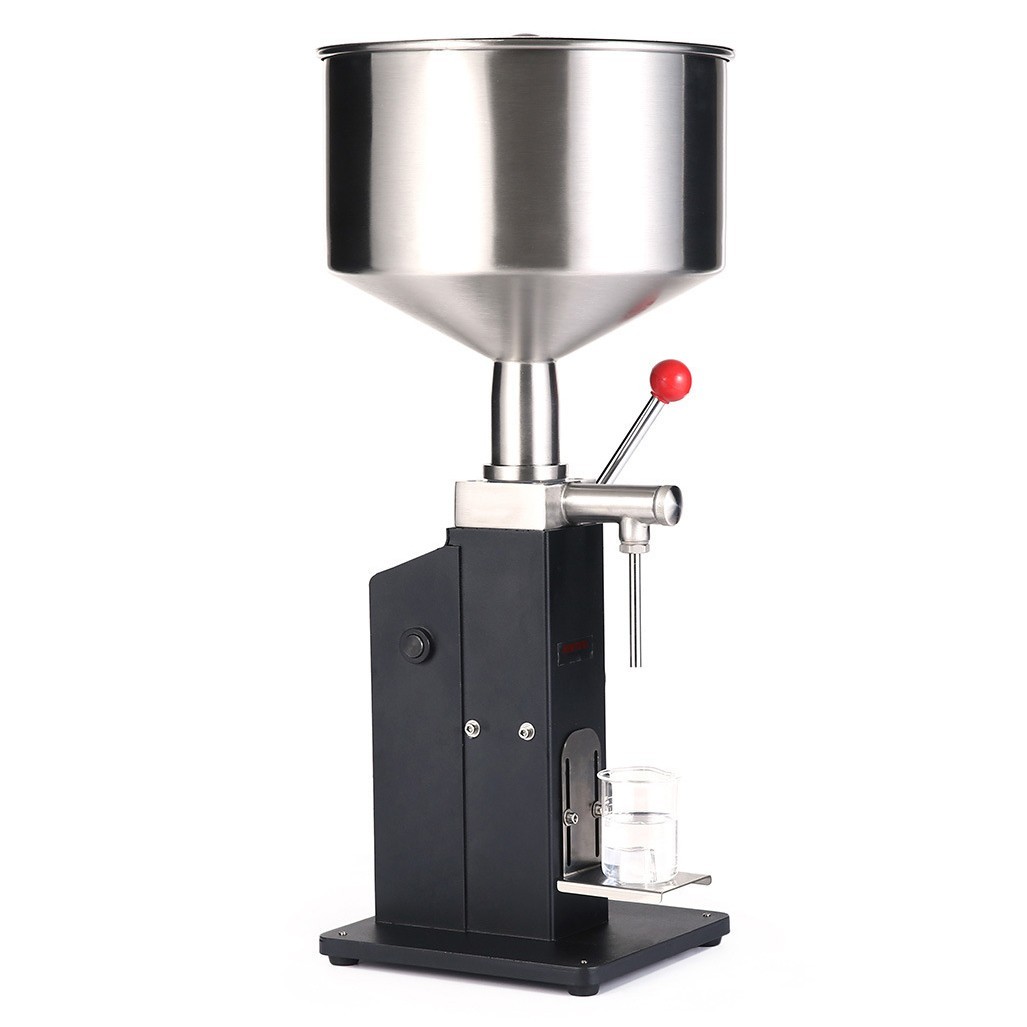
This is the single product in this guide. The unit is manually driven, with fill volume choices of 100mL, 200mL, and 300mL. It's designed to handle liquids and pastes including milk, water, oil, liquid soap, juice, and paste, and it can fill bottles, cans, barrels, and pouches. The listed ±1% filling accuracy is the strongest practical feature for batch consistency. A key limitation is the manual drive: operators control every fill, so you won't get the throughput of a powered filler. The 12.5 kg weight and 82 x 32 x 31 cm dimensions mean it needs a stable surface, but not a dedicated factory floor.